- 'Ek hawa ka zonka aaya, toota dali se phool, na pawan ki na chaman ki, kis ki hai yeh bhool, kho gayi khushbu hawa me kuch na raha gaya ... mera jeevan kora kagaz kora hi raha gaya ...' In this song, Kishore Kumar has thrown his haiyu.
If you are a fan of old memorable songs and you are a member of a club that performs such songs then you must remember this experience. If musician (Kalyanji) Anandji sometimes came as the chief guest of your club then you will need to remember. Accepting the request of the audience, Anandjibhai invariably sings a song. If you close your eyes and listen, you will feel that Kishore Kumar is singing. It is also a privilege to hear the memorable song composed by Anandjibhai himself. As he sings, his own eyes get wet. The song means 'My life was left blank, if it was written, tears flowed ...'
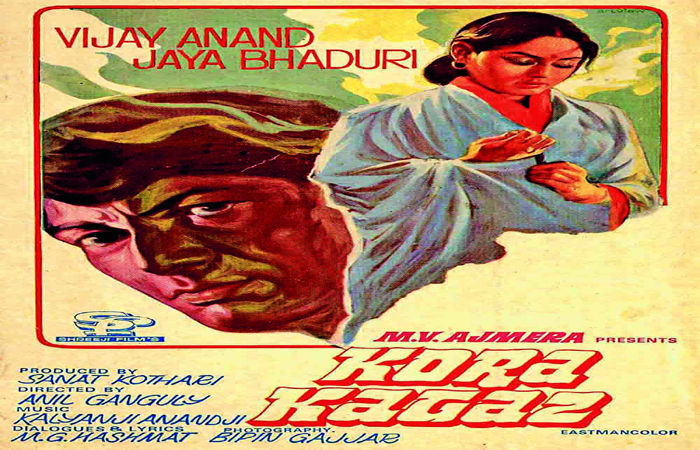
Today, heaps of remakes or dubbed versions of Southern films can be found in Hindi, but there was a time when great films were made from multilingual novels or short stories. One such film is 'Kora Kagaz'. 'Kora Kagaz' is a Hindi adaptation of a Bengali film of the same name based on the original Bengali writer Ashutosh Mukhopadhyay's novel 'Saat Pak Bandhani'. Anil Ganguly was the director of the film. Actor filmmaker Vijay Anand was the hero of the film and actress Jaya Bhadudi Bachchan was the heroine. Simple was a straightforward story. Misunderstandings between husband and wife are created by the husband's mother. Husband and wife get divorced. But can't forget Ekmak. A few years later the two meet accidentally in the waiting room of a railway station. Old memories are refreshed. The misunderstanding is removed and the two become one again.
The storyline of this film was so strong that there was no room for more songs. Cash was three songs. These songs were composed by M. G. Hasmat. Kalyanji-Anandji composed these three songs in such a beautiful way that even today music lovers have not forgotten. The first such song is 'Mera Jeevan Kora Kagaz Kora Hi Rah Gaya ...'. The song combines two light-hearted ragas of sub-classical music, Zinzoti and Khamaj. The sensibility of the words reaches the audience's haiya, so it is arranged in a fourteen-dimensional rhythm. Suffering in the distance is enough to shake the listener. The words of the distance are - 'Ek hawa ka zonka aaya, toota dali se phool, na pawan ki na chaman ki, kis ki hai yeh bhool, kho gayi khushbu hawa mein kuch na raha gaya ...' This song is sung by Kishore Kumar once and in He has given up his haiyu. He also included this song in Kishore Kumar's favorite songs.
The other two songs are sung by Lata Mangeshkar. It's like a song sung by naughty teenagers. This song can be applied to every teenager. This is the song that is sung in the rhythm of Khatkadar Kaherva and in our most famous raga Shivaranjani - 'Mera Paane Mein Nahin Lage Dil Kyun, Dil Pe Kya Pad Gayi Mushkil ...' This song depicts the heart of a teenager who has fallen in love.
The last song is in our national raga khamaj. Gandhibapu's favorite hymn 'Vaishnavajan to tene re' is in Khamaj Raag, so this writer calls it Rashtriya Raag. In Raga Khamaj, there is a song of Risamana Manamana - 'Ruthe Ruthe Piya Manaun Kaise, Aaj Na Jaane Baat Hui Kya, Kyun Ruthe Muz Se ... Jab Tak Wo Na Bole Muz Se, Main Samjum Kaise Ruthe ...' Heroine (Jaya Bhadudi Bachchan) The film manages to entertain as well as inform the protagonist (Vijay Anand) and the song is beautifully presented. Despite the story and only three songs, the film celebrated its silver jubilee with music.
Comments
Post a Comment
Thanx for your precious time